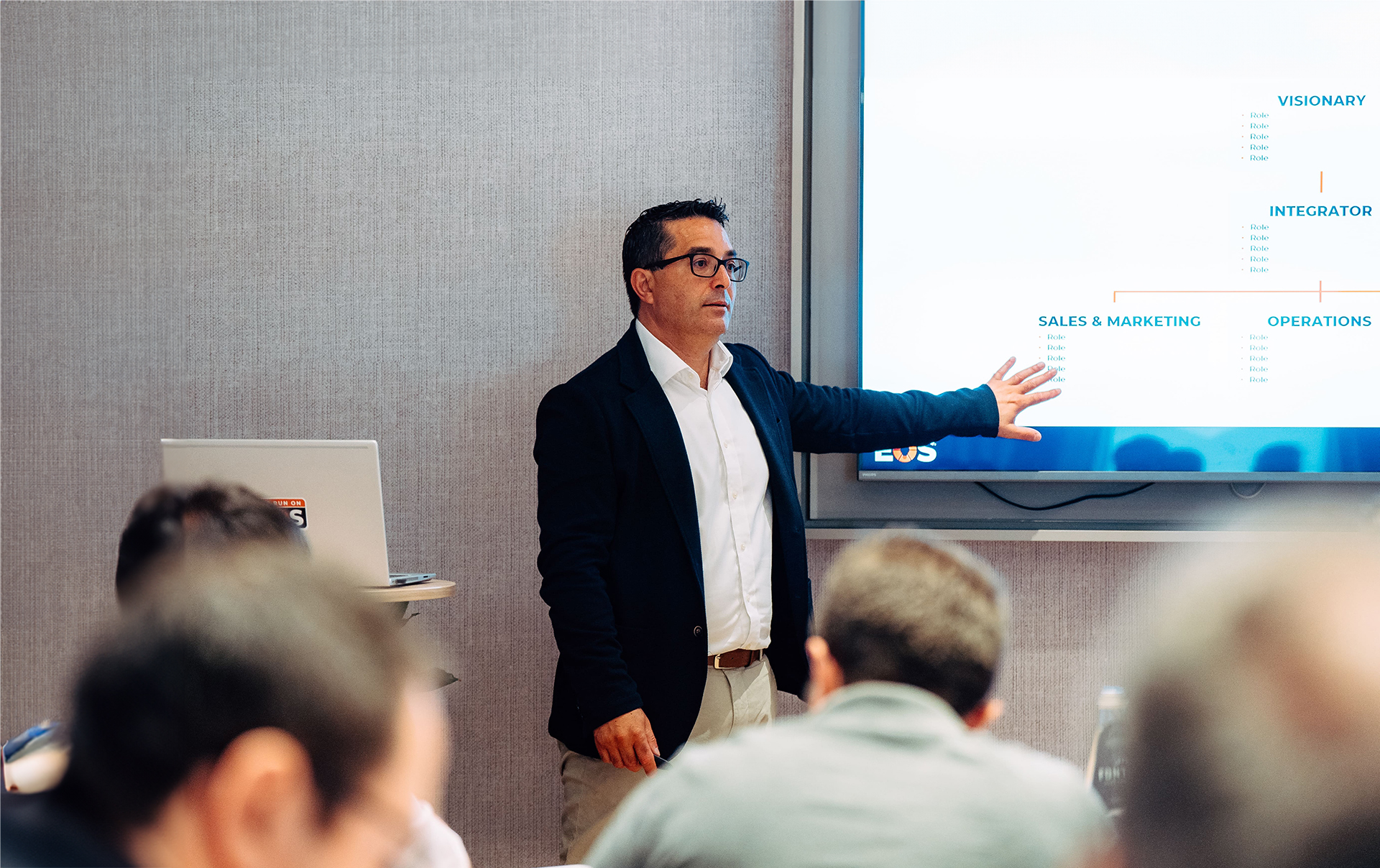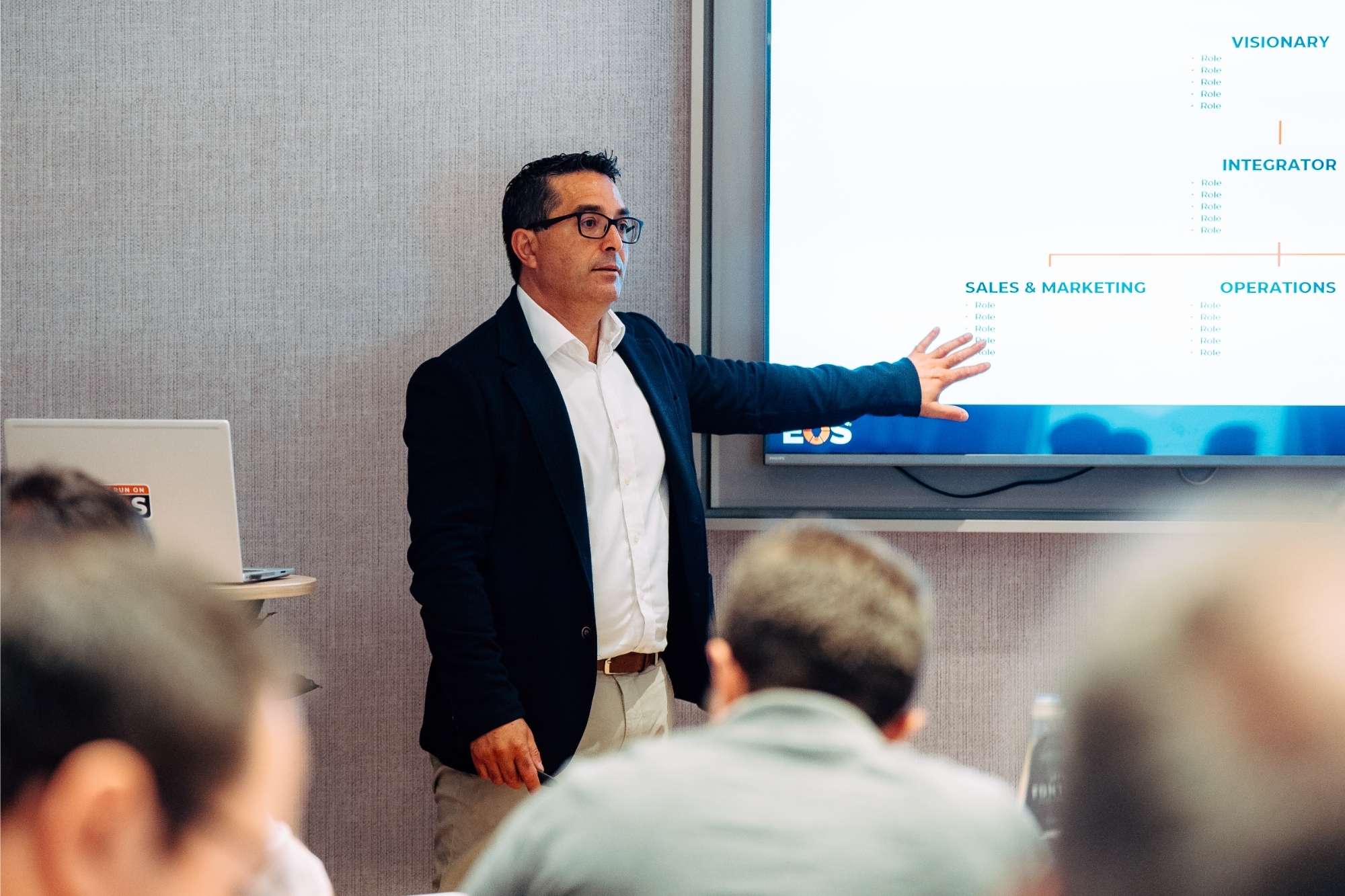
In July last year, Prospero hosted a Business Management Masterclass at the Hyatt Regency in St Julian’s. Business owners and senior leaders joined us for a focused morning away from day‑to‑day pressure.
We’re sharing the key lessons now because the challenges discussed then still exist today. Growth creates complexity. Decisions pile up. Teams lose clarity. The answers are rarely new. They are usually about structure, focus, and discipline.
What the masterclass covered
The session focused on what makes a business run well over time. Not theory. Not motivation. Practical ways to manage an organisation with less noise and more control.
At the centre of the discussion was one idea: every business needs a business management system. Without one, leaders rely on memory, effort, and goodwill. That does not scale.
A business management system works like an operating system. Just as iOS or Android tells a device how to behave, a business management system defines how people, time, energy, and decisions move through the business. It sets the rules for how work gets done, how priorities are set, and how problems are handled.
When properly implemented, a business management system becomes the DNA of the organisation. It shapes how leaders lead, how teams work together, and how the business responds under pressure. Instead of depending on heroic effort or constant intervention from the owner, the business starts to run in a consistent, predictable way.
We explored the EOS® six key components found in every business and understood what 100% strong in each component actually means:
- Vision – clear direction and shared priorities
- People – the right people in the right seats
- Data – running the business on hard facts, not opinions
- Issues – solving problems at the root, once and for all
- Processes – simple, consistent ways of working
- Traction – turning the vision into a plan
Key takeaways for business owners
- Choose a business management system and commit to it. It does not have to be EOS®, but it must be implemented fully and consistently.
- Simple does not mean easy. EOS® is based on timeless principles. The tools are clear. The work still requires discipline.
- Working in the business is not building the business. Without time set aside to work on structure and priorities, leaders stay busy and stuck.
- Structure creates freedom. Clear roles, priorities, and rhythm reduce pressure and improve decision‑making.
- Problems should be solved once, properly. Avoiding issues costs more than facing them directly.
Tools that stood out
Two EOS® tools generated the strongest discussion during the session.

The People Analyzer™ helps leadership teams assess whether people are a fit by starting with values. It looks first at whether someone lives the company’s core values most of the time. It then assesses whether they get the role, want the role, and have the capacity to do the work required in their seat. This brings clarity and consistency to people decisions.
IDS® (Identify, Discuss, Solve) provides a structured way to surface issues, find the real root cause, and solve problems properly. It stops the same issues from returning week after week.
Both tools reinforce one message: clarity beats effort.
If you want better execution, start with a system
Execution improves when leaders stop relying on memory and urgency. A system creates clear priorities, clear ownership, and a regular rhythm for decision‑making.
This is where EOS® supports leadership teams. It helps businesses get clear on direction, strengthen accountability, and turn plans into action.
The result is not more work. It is better work.
Next step
If you want fewer surprises, clearer priorities, and stronger execution, it starts with a conversation.
Book a meeting with Prospero to talk through your business, your challenges, and whether a structured business management system like EOS® is the right fit for you.
This is best for business owners and leadership teams who want clarity, accountability, and consistent execution.